
 APEDA Certified
Different origins, different strengths.
India dominates the global spice trade in breadth — turmeric, cumin, cardamom, coriander, fenugreek, mustard, fennel, asafoetida, and a long tail of seed and ground spices. India produces over 70% of the world's cumin and 80%+ of its turmeric, with deep regional sourcing belts in Rajasthan, Gujarat, Kerala, and Tamil Nadu.
Vietnam dominates in depth on a narrower set: black pepper (35-40% of world supply), cassia cinnamon, and star anise. Vietnamese exporters are highly competitive on price for these SKUs at industrial volume. For a multi-spice catalog or India-specialty SKUs, India remains the more practical origin — but smart buyers source from both depending on the SKU.
Origin-by-SKU sourcing matrix
| Spice | Best Origin | Why |
|---|---|---|
| Turmeric | India | Curcumin 3-5%, Salem/Erode/Nizamabad belts |
| Cumin (Jeera) | India | 70%+ world supply, Thar Desert oil 2.5%+ |
| Cardamom (green) | India | Idukki/Wayanad highlands, 8mm bold |
| Coriander, Fenugreek, Mustard | India | India-specialty, Vietnam doesn't grow at scale |
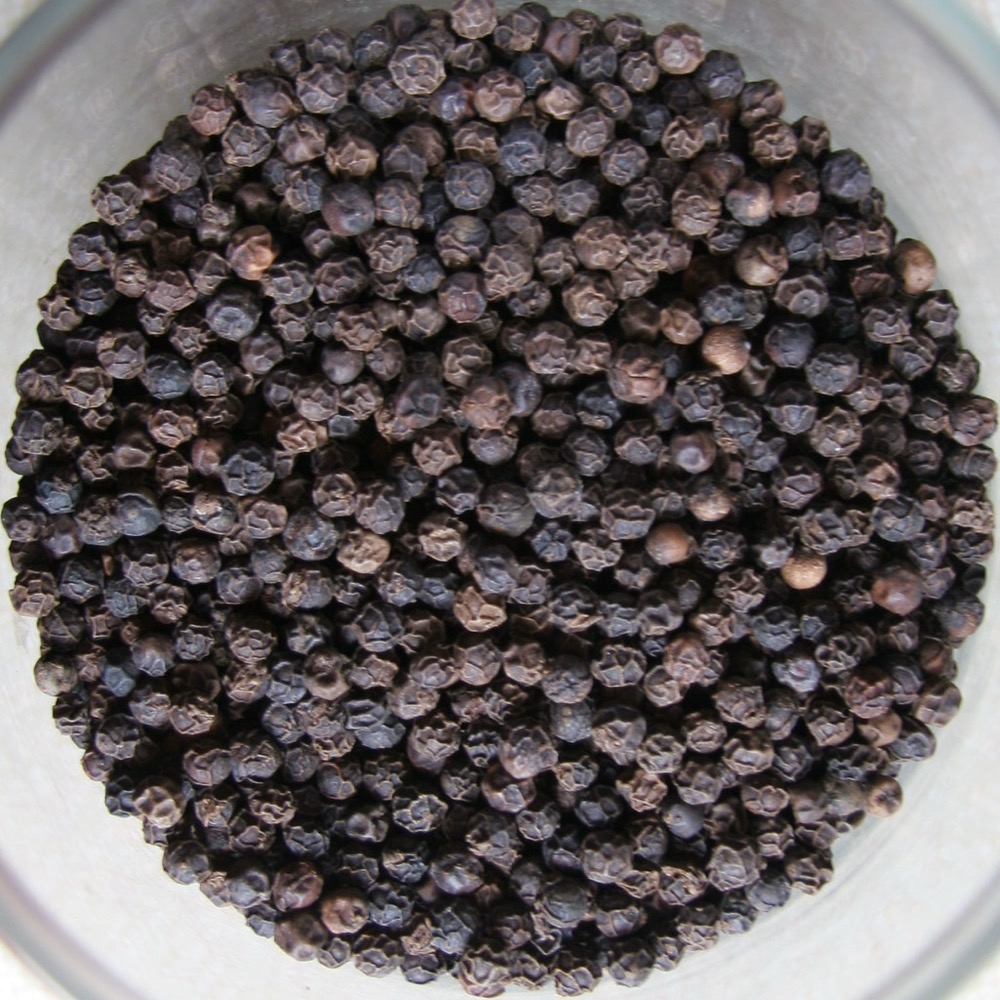
| Black Pepper | Vietnam (industrial) India (premium) | Vietnam wins on price; India wins on Malabar/Tellicherry premium |
| Cinnamon (cassia) | Vietnam | Larger acreage, lower price |
| Cinnamon (true / Ceylon) | Sri Lanka | Neither — Sri Lankan |
| Star Anise | Vietnam / China | India doesn't grow commercially |
| Chili | India | Guntur, Byadgi, Kashmiri varieties |
Where Each Origin Wins
How India and Vietnam compare on the six dimensions buyers care about most when sourcing global spices.
1. Catalogue Breadth
India: 30+ commercially exported spice SKUs from a single origin — turmeric, cumin, cardamom, coriander, fenugreek, mustard, fennel, asafoetida, chili.
Vietnam: Concentrated catalogue — black pepper, cassia cinnamon, star anise dominate. Limited overlap with Indian SKUs.
2. Black Pepper Specifically
India: Premium-tier Malabar & Tellicherry, piperine 4.5-7%, command 15-25% premium globally.
Vietnam: Industrial-tier ASTA pepper, 35-40% of world supply, 5-15% cheaper at scale.
3. Cumin, Turmeric & Cardamom
India: The only viable origin at scale. Cumin volatile oil 2.5%+, turmeric curcumin 3-5%, green cardamom 8mm bold.
Vietnam: Negligible commercial production of these SKUs.
4. Certification & Compliance
India: APEDA, FSSAI, Spice Board of India, plus optional USDA/EU Organic, Halal, Kosher, BRC, SMETA. Spice-specific regulatory infrastructure.
Vietnam: VFA license, ISO/HACCP, plus same destination-country certifications on request. Comparable export-grade compliance.
5. Pesticide MRL & Food Safety
India: EU MRL panel routinely tested at NABL-accredited labs; ethylene-oxide concerns historical & addressable with pre-shipment COA.
Vietnam: Comparable lab capacity; chlorpyrifos/glyphosate residues require explicit testing for EU shipments.
6. Logistics & Lead Time
India: Mundra/JNPT to Europe ~22-28 days, USA ~28-35 days, GCC ~5-7 days. Strong air-freight options.
Vietnam: HCMC/Hai Phong to Europe ~24-30 days, USA ~28-32 days. Comparable transit, slightly different routing.
Which Origin For Which Category
Multi-Spice Catalogue Buyer
Choose India. Single origin for 30+ SKUs simplifies logistics, documentation, and quality benchmarking. Aethon Overseas covers the full range.
Industrial Black Pepper / Cinnamon
Consider Vietnam for commodity-grade pepper and cassia at full-container volumes — best price-per-MT in those specific SKUs.
Premium Spice Brand / Specialty Retail
Choose India. Malabar/Tellicherry pepper, Salem turmeric, Idukki cardamom, Thar cumin — origin-pedigree SKUs that command premium retail pricing.
Multi-Origin Strategic Buyer
Source from both. India for turmeric, cumin, cardamom, coriander, fenugreek; Vietnam for black pepper and cassia. Two specialist relationships beat one aggregator.
The Honest Way to Compare Origins
The cleanest way to decide between Indian and Vietnamese suppliers for a given SKU is to request samples and a written quote from a credible exporter in each origin on the same spec, MOQ, and Incoterm — and benchmark COA, packaging, and lead time once they arrive. For India-specialty SKUs (turmeric, cumin, cardamom), the comparison is largely academic — India is the only origin at scale.
We send 500 g samples free of charge (freight at cost) for evaluation, plus a written FOB quote within 24 hours. No corporate-account onboarding required for the first sample.
- 1. Tell us your product, MOQ, destination port, Incoterm.
- 2. We send a written FOB quote and a 500 g sample.
- 3. You benchmark against your other quotes — no commitment.
- 4. If you proceed, the same desk handles the order end-to-end.
Get a 24-Hour Quote
Tell us the product, target MOQ, and destination port. Free samples available; no onboarding required for the first quote.
WhatsApp (fastest response):
Response within 24 hours · Free samples available
Sources & Further Reading
Public, verifiable sources we reference for the company facts in this comparison. We recommend cross-checking any claim before placing an order.
- APEDA — Agricultural & Processed Food Products Export Development Authority — verify Indian-exporter registration status.
- FSSAI — Food Safety and Standards Authority of India — verify food-safety license details.
- Vietnam Pepper & Spice Association (VPSA) — official Vietnamese pepper trade body, market data and exporter directory.
- Vietnam Food Administration — Vietnamese food-safety regulator.
- Spice Board of India — quality specifications and trade data for Indian spice exports.
- DGFT — Directorate General of Foreign Trade — verify IEC code and India-export policy.
This article is maintained by the Aethon Overseas Editorial Team. Aethon Overseas is an India-only exporter; we do not source or trade Vietnamese spices. Where we describe Vietnamese trade volumes and quality benchmarks we rely on public industry data from the Vietnam Pepper & Spice Association and FAO statistics. Last reviewed 9 May 2026.
India vs Vietnam FAQ
Honest answers about how Indian and Vietnamese spice exporters actually compare in 2026.
Vietnam leads in black pepper and cassia; India offers the widest catalogue — turmeric, cumin, chilli, cardamom, coriander and many SKUs Vietnam doesn't grow. For multi-spice sourcing, India is stronger.
Vietnam is the larger pepper producer, but Indian Malabar and Tellicherry pepper command a premium for aroma and piperine; Aethon supplies both grades.
India's NABL-accredited labs and APEDA framework support EU and US compliance; Aethon tests every batch against destination MRLs.
Yes — turmeric from Salem/Erode, cumin from Unjha, cardamom from Idukki and chilli from Guntur, sourced direct from origin.
Aethon offers flexible MOQs and consolidated India-origin shipments with full documentation and worldwide freight.